
Publish Time: 2026-05-27 15:07:17
Glycerol purification plays an important role in industries such as pharmaceuticals, food processing, cosmetics, and biodiesel production. During the refining process, impurities including pigments, organic compounds, odors, and residual contaminants can affect the quality and appearance of glycerol products. Especially in industrial refining systems, activated carbon helps improve glycerol purity, color, and overall product quality.
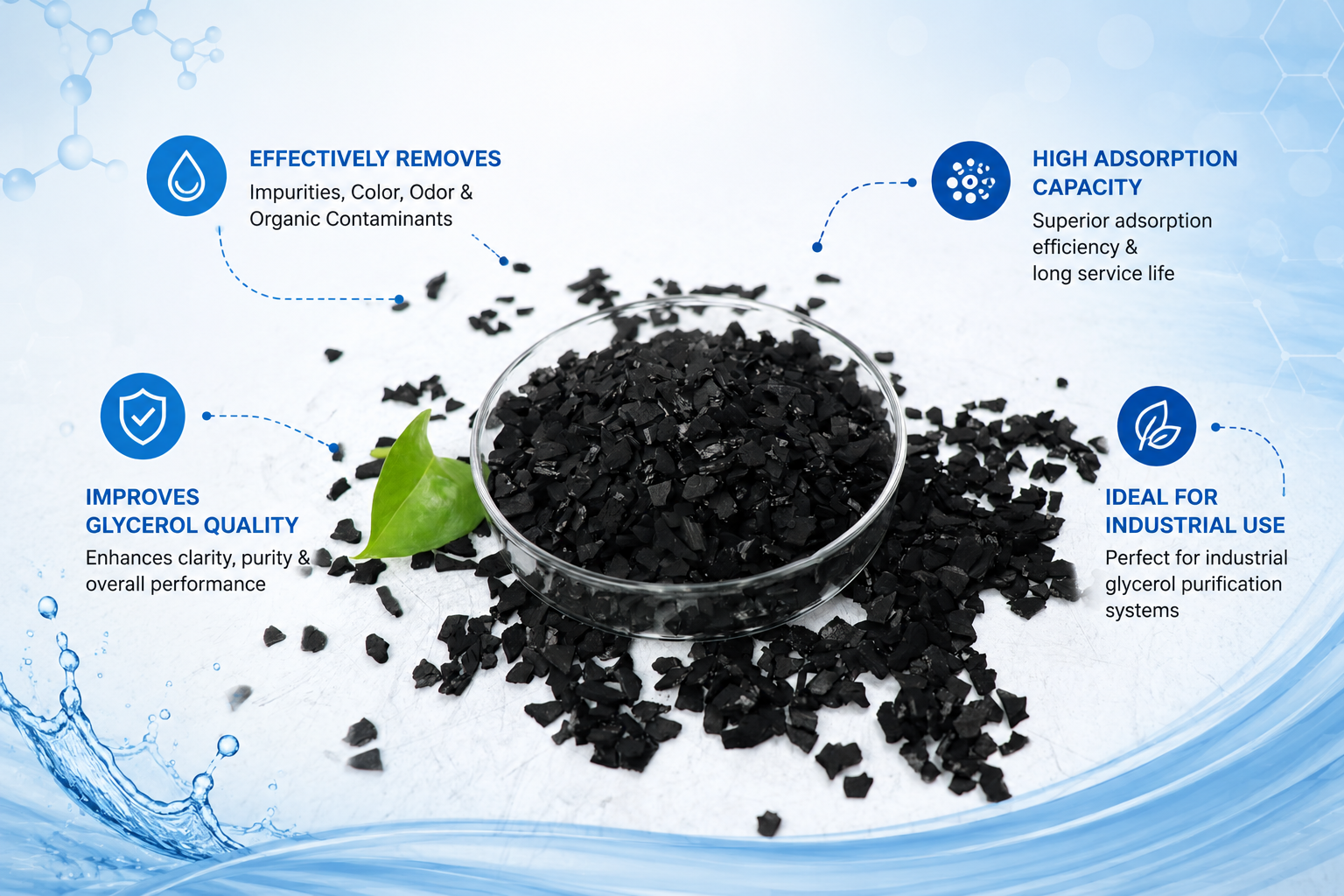
Activated carbon is widely applied in glycerol purification because of its highly developed pore structure and large surface area. During the adsorption process, activated carbon removes color bodies, organic residues, unpleasant odors, and trace contaminants, resulting in clearer and higher-purity glycerol products suitable for industrial applications.
Among different types of activated carbon, coconut shell activated carbon is especially popular for glycerol purification systems. It features high hardness, low ash content, and excellent micropore distribution, making it highly efficient in removing small organic molecules and pigments. Compared with coal-based or wood-based carbon, coconut shell activated carbon provides longer service life and more stable adsorption performance in continuous purification operations.
Activated carbon adsorption systems provide several advantages for glycerol refining industries. They help improve product transparency and reduce impurities without causing significant chemical changes to glycerol. The adsorption process is also environmentally friendly, making it a preferred solution for modern industrial purification requirements.
Activated carbon is commonly used in biodiesel glycerol refining, pharmaceutical-grade glycerin purification, cosmetic ingredient processing, and food-grade glycerol production. In biodiesel industries, crude glycerol often contains residual methanol, soap, pigments, and organic impurities. Activated carbon adsorption helps remove these contaminants and improves the final glycerol quality, making it more suitable for further industrial use or commercial sale.
Selecting the appropriate activated carbon is essential for achieving efficient purification results. Factors such as iodine value, particle size, hardness, moisture content, and adsorption capacity should be carefully considered based on the purification requirements. High-quality activated carbon with stable physical properties can improve filtration efficiency, extend replacement cycles, and reduce operating costs for glycerol purification systems.
Are you looking for a activated carbon manufacturer with sufficient production capacity and the ability to offer customized services? Click for Quote! Premium Activated Carbon Solutions for Your Industry